

Keywords
Abstract
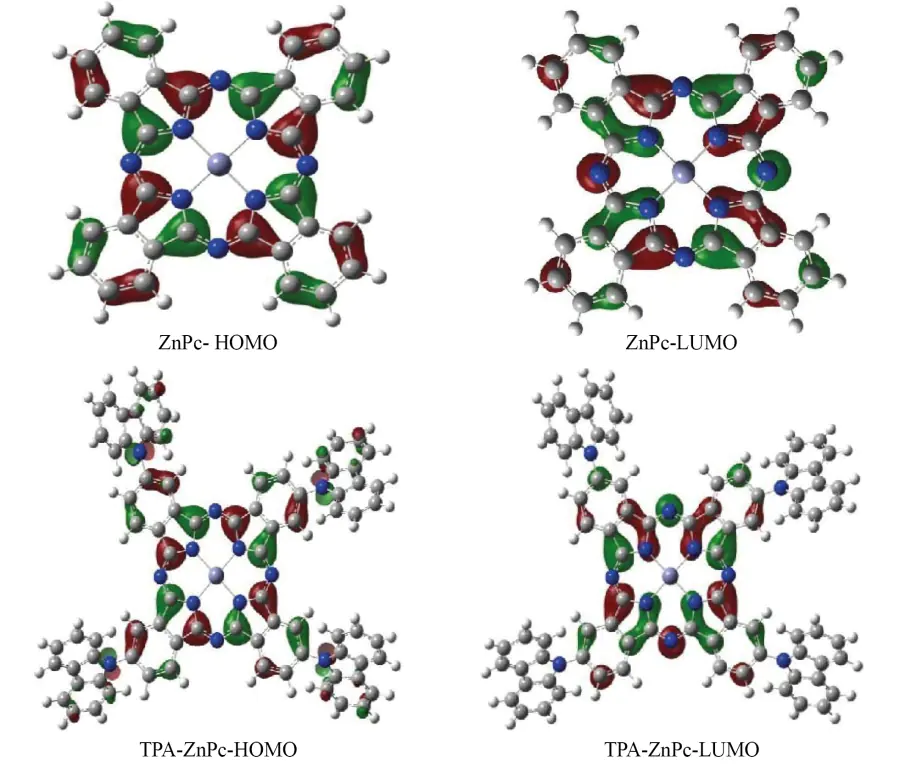
Perovskite solar cells (PSC) are a promising alternative to silicon cells, achieving a power conversion efficiency of 25.8% in ten years. Research on alternatives is necessary. Phthalocyanines, multifunctional materials, have attracted interest in improving PSCs. Used as a hole transport material (HTM), they offer an alternative to spiro-OMeTAD and PTAA due to their low cost, stability, and electronic properties. This work optimizes zinc phthalocyanine (ZnPc) and triphenylamine zinc phthalocyanine (TPA-ZnPc) molecules using DFT (B3LYP/6-311G (d,p)) to analyze the effect of triphenylamine substitution. Adding triphenylamine modifies molecular geometry and reduces hole transport capacity. The bandgap energies are 2.178 eV (ZnPc) and 2.062 eV (TPA-ZnPc). Although both absorb in the visible range, TPA-ZnPc exhibits enhanced absorption. ZnPc demonstrates strong potential as an hole transport material with MAPbI3.